Blog
What should I do to prepare my car for an automatic wash?

For a car wash operator, this question is a golden opportunity to engage in customer education that not only ensures a smoother, safer wash process but also reinforces your brand’s commitment to professionalism and vehicle protection. Providing clear, simple preparation guidelines is a proactive measure that can significantly reduce the risk of vehicle damage claims and improve overall customer satisfaction.
This B2B guide will transform that simple customer query into a comprehensive operational best-practice manual for facility owners and managers. We will outline the key pre-wash checks that customers should perform and explain the underlying reasons from an operator’s perspective. Furthermore, we will detail how to communicate these instructions effectively through on-site signage and digital channels. A well-informed customer is a better, safer customer, and clear preparation guidelines are a hallmark of a professionally managed, risk-averse operation. An AUTOSHER system is designed for safety, but that safety is amplified when customers are active partners in the process.
Section 1: The Operator’s Rationale – Why Customer Preparation Matters
Before detailing the specific instructions for customers, it’s crucial for operators to understand the business case for enforcing pre-wash preparation. This isn’t just about customer service; it’s about risk management and operational efficiency.
Mitigating Pre-Existing Damage Claims
The most common source of damage claims at a car wash is from parts that were already loose, cracked, or broken before the vehicle entered the tunnel. A cracked side mirror, a loose piece of trim, or a faulty power antenna can easily be dislodged by the normal forces of a car wash. By instructing customers to inspect their vehicles, you are implicitly encouraging them to take note of any pre-existing conditions. A prominent sign that reads “Please check for loose parts or pre-existing damage before entering” can be a powerful tool in disputing a fraudulent or mistaken claim.
Preventing Equipment Damage and Downtime
Customer vehicles can also pose a risk to your expensive equipment. A loose trailer hitch ball, a non-retracted antenna, or an aftermarket roof rack that exceeds your height clearance can snag on wash media or collide with arches. This can cause significant damage to your equipment, leading to costly repairs and even more costly operational downtime. Clear instructions on what must be removed or secured are essential for protecting your investment.
Improving Wash Quality
Certain pre-wash steps can directly impact the quality of the final product. For example, a heavily soiled vehicle with caked-on mud benefits from being hosed down in a prep area first. This prevents overwhelming the tunnel’s chemical and friction systems and ensures a better result. Educating customers on these steps helps your equipment perform at its best.
Section 2: The Essential Pre-Wash Checklist for Customers
This is the core information that needs to be communicated. The instructions should be simple, clear, and focused on the most common problem areas. This checklist can be adapted for signage, websites, and employee scripts.
1. Antennas Must Be Removed or Retracted
For the Customer: “Please remove or fully retract your vehicle’s antenna. Mast antennas can be damaged by the wash brushes.”
The Operator’s Perspective: This is the single most common point of failure. Fixed mast antennas, especially older or aftermarket ones, are not designed to withstand the lateral force of wrap-around brushes. While modern systems like AUTOSHER’s use intelligent sensors to work around many obstacles, a tall, thin antenna is difficult to detect and is best removed. Power antennas must be fully retracted to avoid being caught.
2. Secure Your Side Mirrors
For the Customer: “Please ensure your side mirrors are secure. If you have folding mirrors, we recommend folding them in.”
The Operator’s Perspective: Modern wrap-around brushes are designed to be gentle, but they still exert some force. If a mirror housing is already cracked, loose, or sun-damaged, this force can be enough to break it. Encouraging customers to fold in their mirrors (especially on wide vehicles like trucks and SUVs) reduces the profile of the vehicle and minimizes the force exerted on these components.
3. Check for Any Loose Parts or Damage
For the Customer: “For your vehicle’s protection, please check for any loose trim, spoilers, bug shields, or pre-existing damage before entering the wash.”
The Operator’s Perspective: This is a crucial liability-management instruction. It places a small amount of responsibility on the customer to be aware of their vehicle’s condition. It covers a wide range of potential issues, from loose bumper covers held on by a thread to aftermarket accessories that were not installed to OEM standards.
4. Empty Exterior Racks and Holders
For the Customer: “Please remove all items from roof racks and bike racks. We cannot be responsible for aftermarket accessories.”
The Operator’s Perspective: Roof racks, ski racks, and bike carriers are a major hazard. They can easily snag on overhead equipment. A clear policy that the tunnel is only for a “naked” vehicle is the safest approach. This also includes removing any flags or decorative items.
5. For Pickup Truck Owners: Clear Your Bed
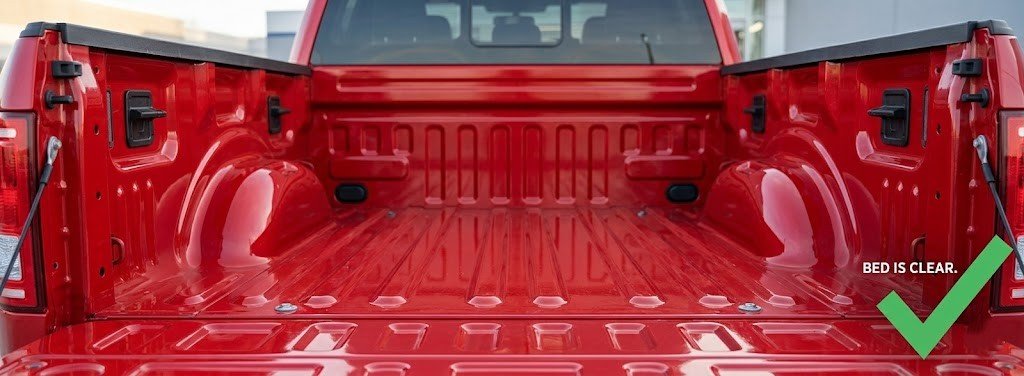
For the Customer: “Pickup owners: Please ensure your truck bed is empty before washing. Debris can fly out and damage your vehicle or our equipment.”
The Operator’s Perspective: This is a huge issue. Loose items in a truck bed—from tools and sports equipment to trash and gravel—can be blown out by the high-velocity air dryers. These items can become dangerous projectiles inside the tunnel, potentially damaging the customer’s own vehicle, the car behind them, or your equipment. A strict “empty bed” policy is essential.
Section 3: Effective Communication – The Operator’s Toolkit
Having a checklist is useless if it isn’t communicated effectively. A multi-channel approach ensures the message is received and understood.
Clear and Concise On-Site Signage
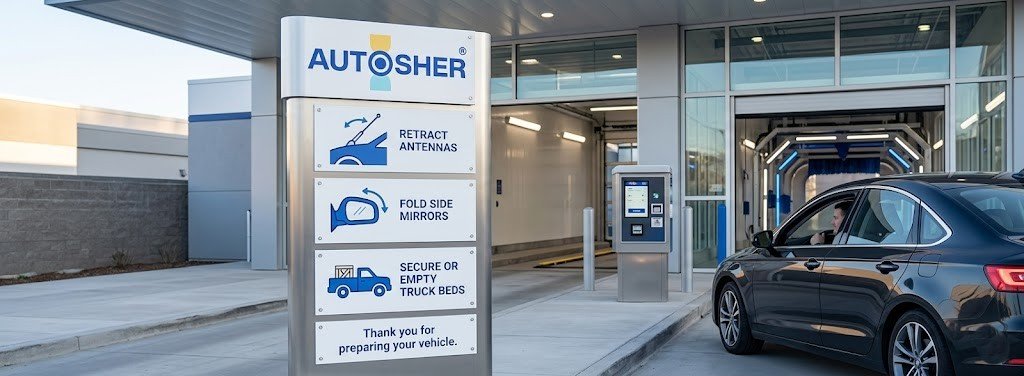
Signage is your first line of defense. It should be:
- Visible: Placed well before the pay station, giving customers time to read it and act.
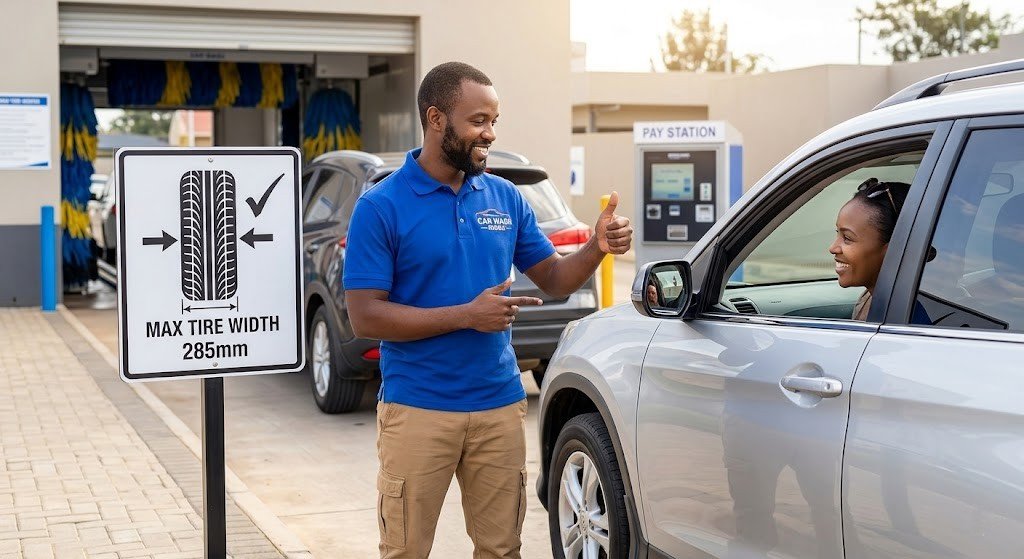
- Graphical: Use simple, universal icons to overcome language barriers and make the information easy to digest quickly.
- Polite and Professional: The tone should be helpful (“For a Safer Wash…”) rather than demanding (“You MUST…”).
- Comprehensive: Include a clear warning about aftermarket accessories and a disclaimer that you are not responsible for pre-existing damage.
The Role of the Attendant
A well-trained attendant is your most effective tool. They can visually scan vehicles as they approach and provide friendly, personalized reminders.
- “Good morning! Just a friendly reminder to retract your antenna before we send you through.”
- “Hey there, I noticed you have a bike rack on the back. For safety, we can’t send that through the wash. You’re welcome to use our self-serve bays today!”
This human interaction is invaluable for catching issues before they become problems and reinforces a culture of safety and customer care.
Digital Communication
Use your website and social media to educate customers. A dedicated “Wash Safety” or “How to Prepare” page on your website can provide more detail than a sign. Occasional social media posts with tips for preparing for a wash can also be helpful, especially for new customers.
Section 4: Special Considerations and Policies
Certain types of vehicles and accessories require a firm and clear policy.
Aftermarket Accessories
It is wise to have a blanket policy of not washing vehicles with certain aftermarket modifications, such as large light bars, oversized off-road tires that won’t fit the guide rails, or complex roof rack systems. It is better to politely turn away one vehicle than to risk a major damage claim or equipment failure.
Vehicle Condition
Operators have the right to refuse service to a vehicle that is in obviously poor condition (e.g., a bumper held on with tape, extreme rust, or significant pre-existing body damage). Politely explaining that your wash is not safe for their vehicle is a professional and responsible action.
Dually Trucks and Low-Profile Tires
Your conveyor system will have specific limitations. Ensure you have clear signage indicating your maximum tire width and a warning that certain low-profile tires with exposed rims may not be compatible with your guide rail system. This manages customer expectations and prevents wheel damage.
Conclusion: A Partnership in Protection
Preparing a car for an automatic wash is a simple process that pays huge dividends in safety and customer satisfaction. By viewing customer education as a core operational function, you can create a partnership with your customers in protecting their vehicles. Clear communication through signage, well-trained staff, and digital channels transforms the process from a set of rules into a shared commitment to a great outcome. This proactive approach not only minimizes your risk and liability but also elevates your brand as a safe, professional, and trustworthy car care provider.