
Blog
How do I locate automatic car washes that provide express or quick wash options?

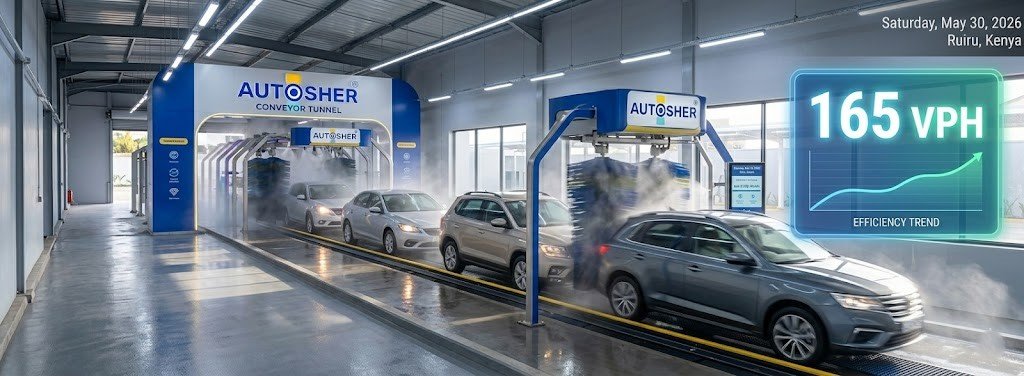
The consumer’s search for an “express or quick wash” is a direct reflection of a modern economy that values time above all else. For the car wash investor and operator, this demand is not just a trend; it is the blueprint for the most profitable and scalable business model in the industry: the Express Exterior Car Wash. The customer’s desire for a wash that takes minutes translates into the operator’s primary objective: maximizing Vehicles Per Hour (VPH) without compromising quality.
This comprehensive B2B guide will deconstruct the Express Exterior model, moving beyond the customer’s surface-level desire for speed to the complex operational engineering required to deliver it profitably. We will explore the essential equipment, site layout, and process optimizations that define a high-throughput facility. For the modern investor, understanding the mechanics of the express model is fundamental to developing a business that meets market demand, minimizes labor costs, and is built for rapid growth and scalability. AUTOSHER’s integrated tunnel systems are specifically engineered to be the high-performance engine at the heart of the Express Exterior model.
Section 1: The Express Exterior Model – A Paradigm of Efficiency
Before diving into the components, it’s crucial to understand the business model itself. The Express Exterior wash is a highly specialized system designed for one purpose: to wash the outside of a high volume of vehicles quickly, efficiently, and with minimal labor.
Key Characteristics
- High Volume: Express tunnels are designed to process anywhere from 100 to over 200 cars per hour at peak capacity.
- Automation-Focused: The entire wash and dry process is automated, controlled by a central PLC.
- Low Labor: A typical express site can be run with only one or two employees on-site to guide customers and manage the site. There is no interior cleaning or manual finishing.
- Value-Added Self-Service: The model is almost always paired with a large, free-to-use vacuum area, which is a major customer draw and a key part of the value proposition.
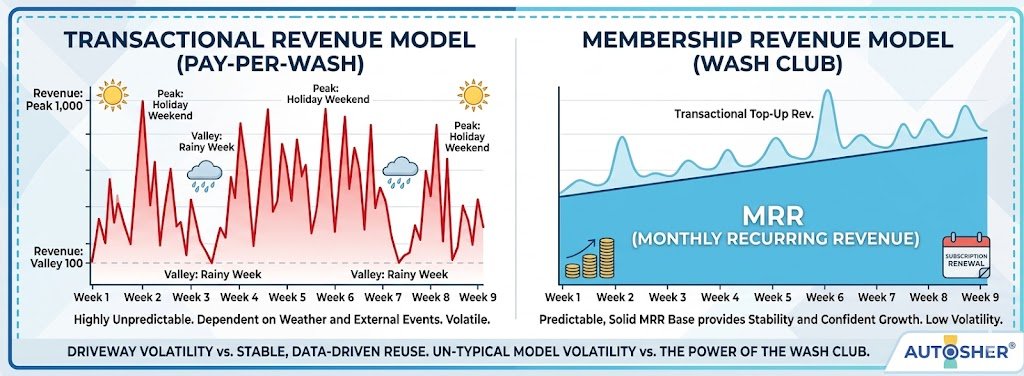
- Subscription-Centric: The high-volume, low-touch nature of the express model is perfectly suited for an unlimited wash club subscription, which becomes the primary revenue driver.
The Business Case
The financial appeal is powerful. By drastically reducing the largest variable cost in a traditional car wash—labor—and focusing on a high-volume, recurring-revenue model, the Express Exterior wash offers exceptional profit margins and a highly scalable business concept. An owner can replicate the model across multiple sites with a consistent brand and operational playbook.
Section 2: The Engine of Speed – Engineering a High-Throughput Tunnel
The heart of the express model is a car wash tunnel engineered for speed and quality. This is not simply about making the conveyor faster; it’s about ensuring every component can perform its function perfectly within a shorter time frame.
The Conveyor System
The conveyor is the pacemaker. A modern express tunnel will typically be 100 to 150 feet long, allowing for a faster conveyor speed while giving each piece of equipment adequate contact time. Flat-belt conveyors are increasingly popular as they are perceived by customers as easier and safer to load onto, which reduces hesitation at the entrance and allows for tighter vehicle spacing (“stacking”), directly increasing VPH.
High-Efficiency Equipment
- Chemical Applicators: Foaming arches must apply pre-soaks and detergents quickly and completely to ensure proper chemical dwell time even at high conveyor speeds.
- Friction Media: Closed-cell foam brushes are essential. They clean effectively with gentle contact and rinse clean instantly, which is critical in a high-speed environment. Their lightweight nature also allows for faster, more responsive contouring around vehicles.
- Rinsing Arches: Multiple high-pressure rinsing arches are needed to ensure all soaps and residues are removed from the vehicle before it enters the drying stage.
- Drying Systems: This is often the biggest challenge. A high-speed express tunnel requires a powerful and intelligent drying system. AUTOSHER’s WindShear dryers use a series of contouring blowers, including specialized units for sides and rear, to strip water off the vehicle’s surface, achieving a touchless dry at high line speeds.
Section 3: Optimizing Flow – The Site Layout and Customer Journey
The “express” experience begins the moment a customer pulls into the driveway. A poorly designed site can create bottlenecks that negate the speed of the tunnel itself.
The Entrance and Stacking Lanes
A proper express site needs adequate “stacking” room—the space for cars to line up before the pay stations. A site should have enough room to stack at least 10-15 cars to handle peak rushes without backing up traffic into the street. Multiple lanes leading to automated pay stations are a must.
The Payment Process
The payment process must be lightning-fast. Modern POS kiosks with intuitive touchscreens and tap-to-pay functionality are standard. The ultimate express feature is a dedicated “Members Only” lane using License Plate Recognition (LPR), allowing subscription members to bypass the kiosk entirely, which dramatically increases the site’s overall VPH capacity.
The Free Vacuum Plaza
The free vacuum area is a critical component and a major competitive differentiator. A quality express site will feature 15-25 wide, well-lit, and covered vacuum stalls. Providing powerful vacuums for free creates immense customer value, justifies premium wash prices, and encourages customers to choose your site over competitors. It transforms the car wash from a 3-minute errand into a complete car care destination.
Section 4: The Labor Model and Operational Playbook
The lean labor model is a cornerstone of the express wash’s profitability. This requires a focus on automation, reliability, and smart operational procedures.
The Role of On-Site Staff
With only a few employees on site, their roles are clearly defined:
- Customer Service: Greet customers, guide them onto the conveyor, and, most importantly, sell high-margin unlimited wash club memberships.
- Site Maintenance: Keep the property clean, empty trash receptacles, check chemical levels, and perform routine preventative maintenance.
- Problem Solving: Handle any minor issues that arise with the equipment or customers.
The Importance of Reliability and Remote Monitoring
With a minimal on-site staff, equipment reliability is paramount. Unplanned downtime is catastrophic. This is why investing in a robust, heavy-duty system is critical. Furthermore, modern systems like AUTOSHER’s feature remote diagnostics and monitoring. The ability for technicians to log in remotely, diagnose a problem, and often guide an on-site employee through a simple fix can be the difference between minutes of downtime and hours of lost revenue waiting for a service truck.
Section 5: The Financials of Speed – ROI and Scalability
The Express Exterior model is designed from the ground up for financial performance and growth.
High Revenue Potential
The combination of high VPH and a subscription-based revenue model creates an exceptionally high revenue ceiling. A well-run site in a good location can generate well over $1 million in annual revenue.
Favorable Cost Structure
The lean labor model keeps operating expenses in check. While the initial capital investment in land and equipment is significant, the high potential revenue and strong profit margins lead to a compelling return on investment. The primary variable costs are utilities (water, electricity) and chemicals, which can be managed and optimized with efficient equipment.
Built for Scalability
The express model is essentially a repeatable formula. Once an operator has perfected the model at one location—from the site layout and equipment package to the marketing and membership sales process—it can be replicated across multiple sites. This allows for the creation of a regional or even national brand with a consistent customer experience and centralized management, making it highly attractive to private equity and other large-scale investors.
Conclusion: Engineering the Future of Car Washing
The public’s search for a “quick wash” has defined the most successful car wash business model of the 21st century. The Express Exterior car wash, with its focus on high throughput, automation, and recurring revenue, is a finely tuned machine built for profitability and growth. For the investor, success lies in understanding that speed is not just a feature; it is the result of a holistic system where the site layout, tunnel equipment, and operational strategy all work in concert to deliver a fast, high-quality experience that keeps customers coming back.